Assignment 3: Universal gravitation. Discovery disputes.
(i) Why was that a breakthrough?
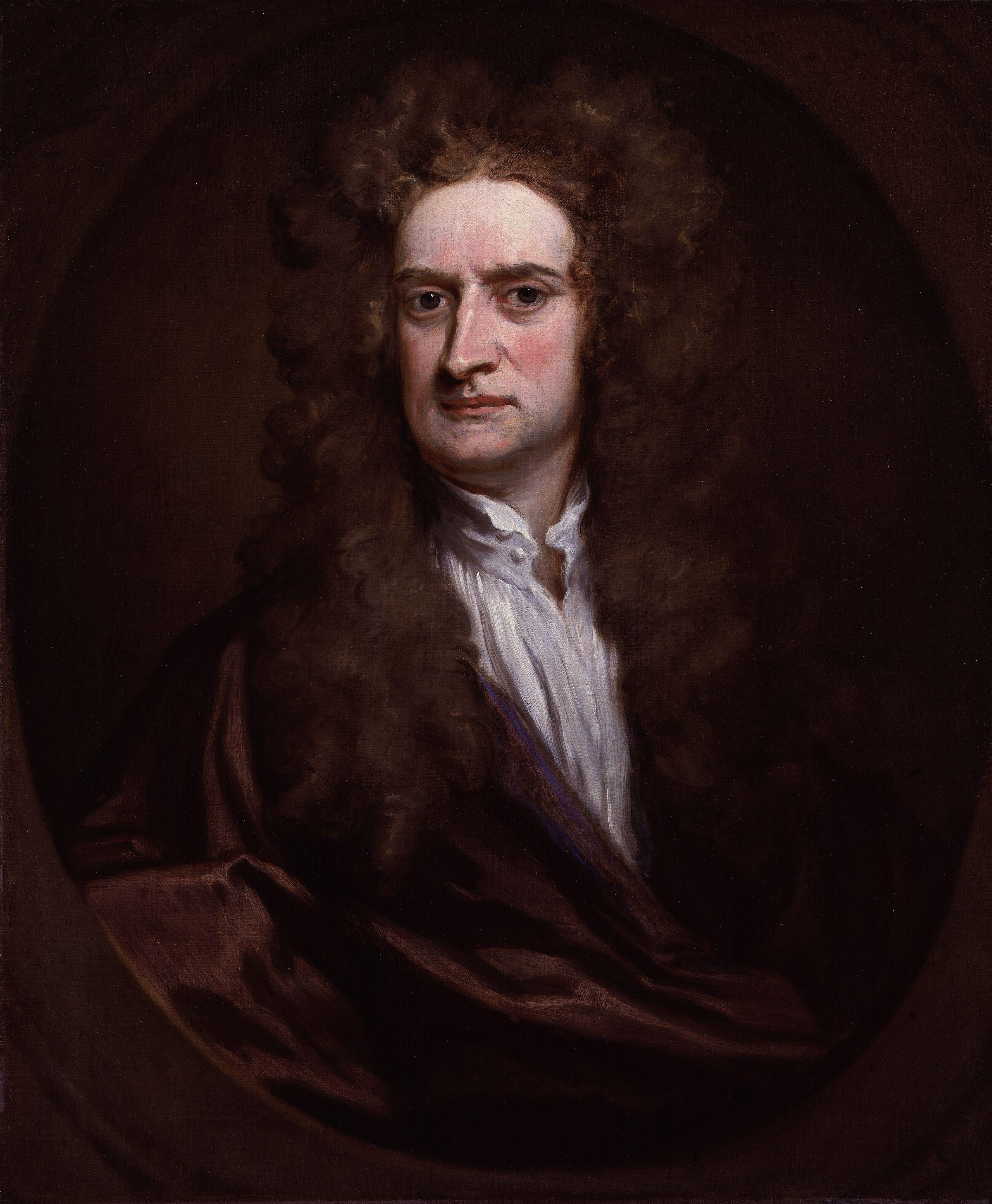
Newton proving mathematically that Kepler’s laws follow the
universal gravitational force was a breakthrough. Many scientists before him
believed that the forces between the Earth and the Moon were independent from
the external forces observed in space. Newton unified the forces and stated
that this invisible force observed throughout the universe as the universal law
of gravitation. He came to this conclusion though his thought experiment. This
experiment consisted of firing a cannon ball from a high point on earth in a
straight line. He was aware that the cannon ball would move in a straight line
and that the cannon ball would also fall down towards earth due to gravity. He
then thought of firing the cannon at high speeds will make the cannon ball be
balanced between going in a straight line and falling hence orbiting earth,
like the moon. This breakthrough unified the gravitational force observed on
Earth and in the universe.
(ii) Study, using any materials you like, the history of
that discovery. It started much earlier than the date of Halley's visit to
Cambridge, shown in the documentary. There are parts not covered by the
documentary, like the role of Newton's arch-enemy Robert Hooke. In the opinion
of some historians, especially recently, that Hooke made important
contributions, but dispised by Newton was never properly acknowledged. Describe
your findings about Newton, Hooke, Halley and Wren's discussions about
astronomy, who they were, where the discussions took place, and so forth.
Robert Hooke, famous for Hooke’s law, had contributed a great
amount towards astronomy. He claimed that he had come up with key theories
regarding gravity before Newton and that he should be credited for them. Robert
Hooke had sent Newton letters that included his hypothesis of the inverse
square force and its relation to the orbit of the planets around the sun, and
how further planets revolved at a slower rate. Newton replied stating he hadn’t
heard of such a theory and was intrigued, so Newton focused on proving it
mathematically and was successful. However Newton did not share his progress of
proofing the inverse square law to Robert Hooke, since he viewed him as a
rival.
Edmund Halley, an astronomer famous for predicting the orbit
of a comet, had met with both Robert Hooke and Christopher Wren at a coffee
shop to discuss theories regarding astronomy. These three individuals were all
interested in the inverse square law of attraction. At the meeting they
discussed if the inverse square law was the result of the elliptical orbits. At
this point Christopher Wren offered a prize to the mathematician who would
proof this theory. This resulted in Edmund Halley to approach Newton regarding
the topic of inverse square law. There Newton showed his proof of inverse
square law. Halley’s questions was what lead Newton to the idea of universal
gravitation. Halley then insisted that Newton publish his work. Newton had
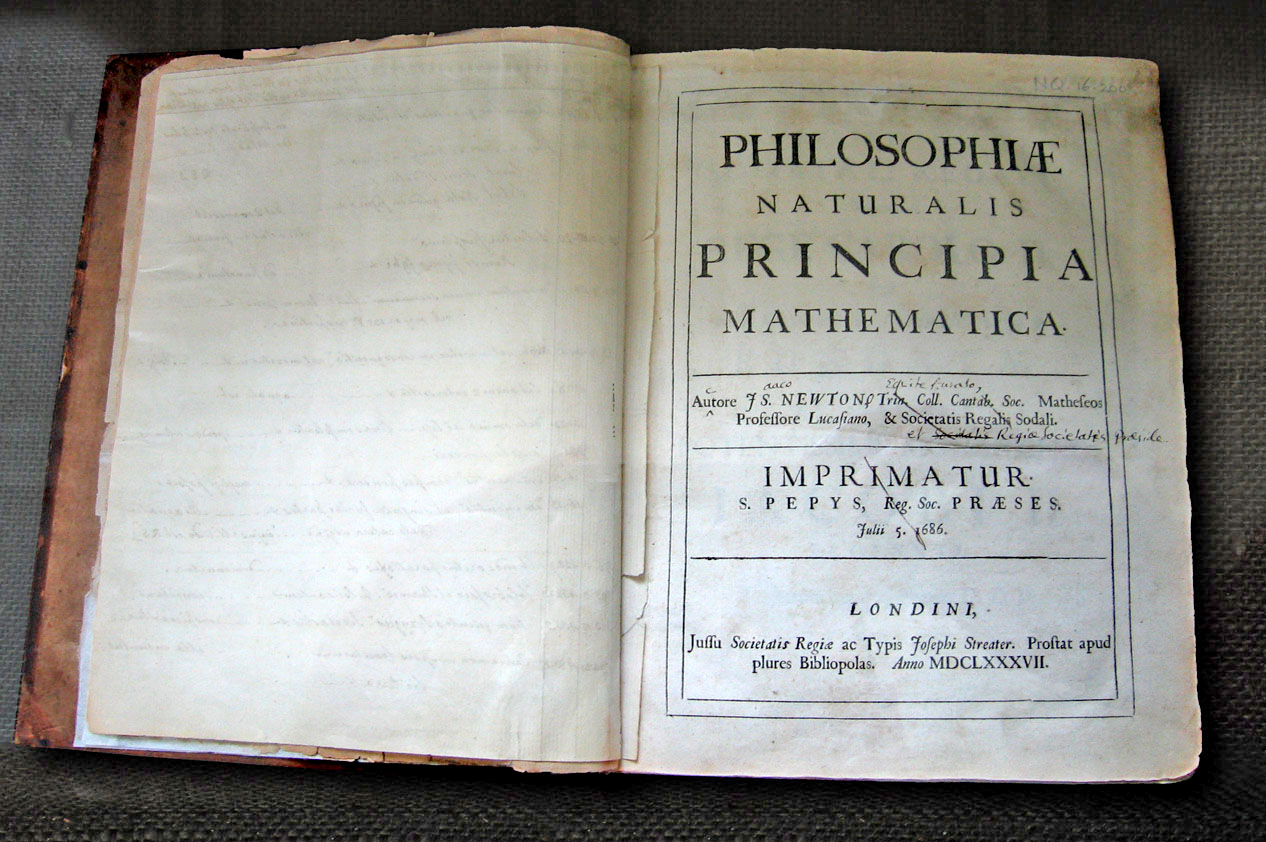
eventually published his work in the book The Principia. Newton states that
Hooke’s letters resulted in his motivation to study orbits however he denies
that it had anything to do with universal gravitation. Newton viewed these
individuals as rivals because they all independently suggested the inverse
square law.

(iii) Briefly, what was the issue between Newton and
Gottfried Wilhelm Leibniz? How did this become the reason for a rift between
the British and Continental science? (You may want to watch one of the youtube
documentaries about Leibniz.) What are your thoughts about the issue of
importance of the first realization (first discovery) vs. full formulation of a
theory? If two persons claim those two contributions, who's more worthy of praise
and a place in history of science. In another situation: who's the real
discoverer: a person who first made a discovery but kept it secret, or the one
who made it later and announced it first?
Gottfried Wilhelm Leibniz, was a mathematician in Germany who is viewed a one of the fathers of calculus. However Isaac Newton, known to be inventor of calculus, had claimed that his ideas were stolen by Leibniz. This accusation resulted in a rivalry between the two individuals. The issue between Newton and Leibniz was they both believed that they alone were the inventors of calculus. Newton had claimed that he had discovered theories for calculus before Leibniz however Newton was reluctant to publish his findings. Leibniz published his findings in 1684 while Newton published his in 1687. In this case Leibniz had published his findings first while Newton claimed to have discovered his theory ahead of time but did not publish his work. I believe that both Newton and Leibniz should be credited for discovering the principles of calculus. However I believe that it is important to publish any new discoveries or theories in advance, since it is crucial for the scientific community to discuss their findings publicly. In the end the individual who publishes their findings first should be praised for their work rather than the individual that finds a discovery but doesn’t share it.
Sources
http://csep10.phys.utk.edu/astr161/lect/history/newtongrav.html
http://www.space.com/24682-edmond-halley-biography.html
http://www.pbs.org/wgbh/nova/newton/principia.html
https://thonyc.wordpress.com/2011/09/28/the-man-who-inverted-and-squared-gravity/
http://www.britannica.com/EBchecked/topic/335266/Gottfried-Wilhelm-Leibniz
http://upload.wikimedia.org/wikipedia/commons/4/41/NewtonsPrincipia.jpg
https://www.learner.org/courses/physics/visual/img_lrg/figure6.jpg
http://upload.wikimedia.org/wikipedia/commons/5/50/Sir_Isaac_Newton_by_Sir_Godfrey_Kneller,_Bt.jpg

